IELTS Number Traps: The Word Beside the Number Decides
Some IELTS questions do not test your English at all. They test whether you read one small word sitting next to a number.
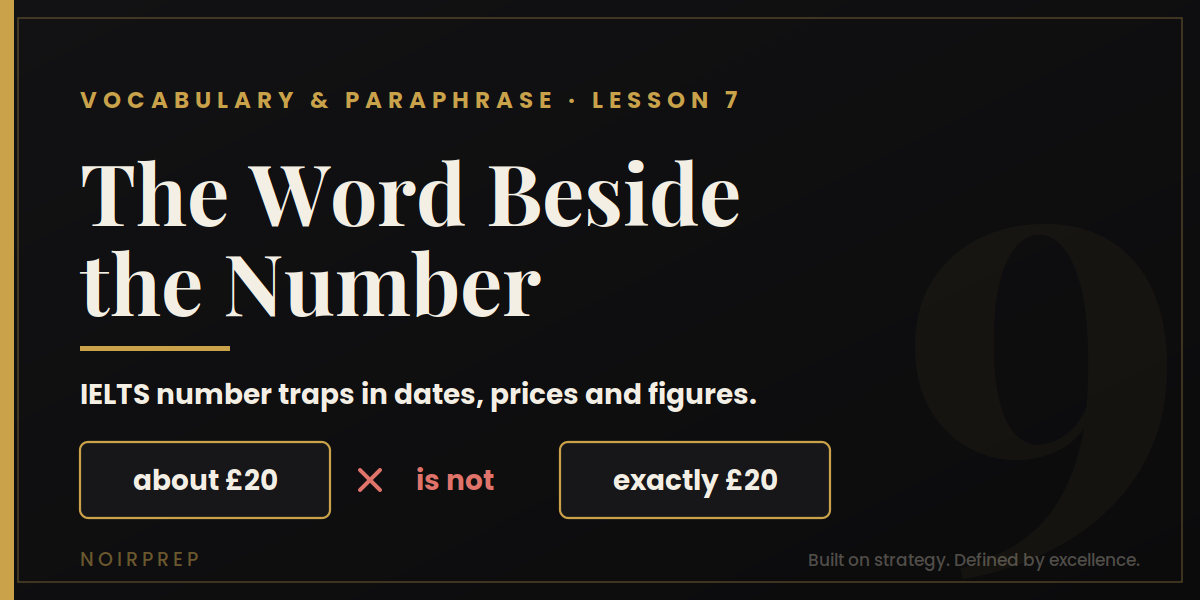
That is how IELTS number traps work. About twenty pounds is not exactly twenty pounds. A decade is not the 2010s. And a deposit of fifty pounds is certainly not a total cost of fifty pounds.
No grammar is hidden here. Everything you need is printed in front of you, which is why these are the cheapest marks on the paper. You lose them, or win them, on a word you never slowed down to read.
The six patterns we have covered so far change how an idea is worded. These traps are different. They change what the idea actually says, while the wording stays almost the same.
Time: The Most Tested Trap of All
Start with centuries, because candidates lose marks here every day.
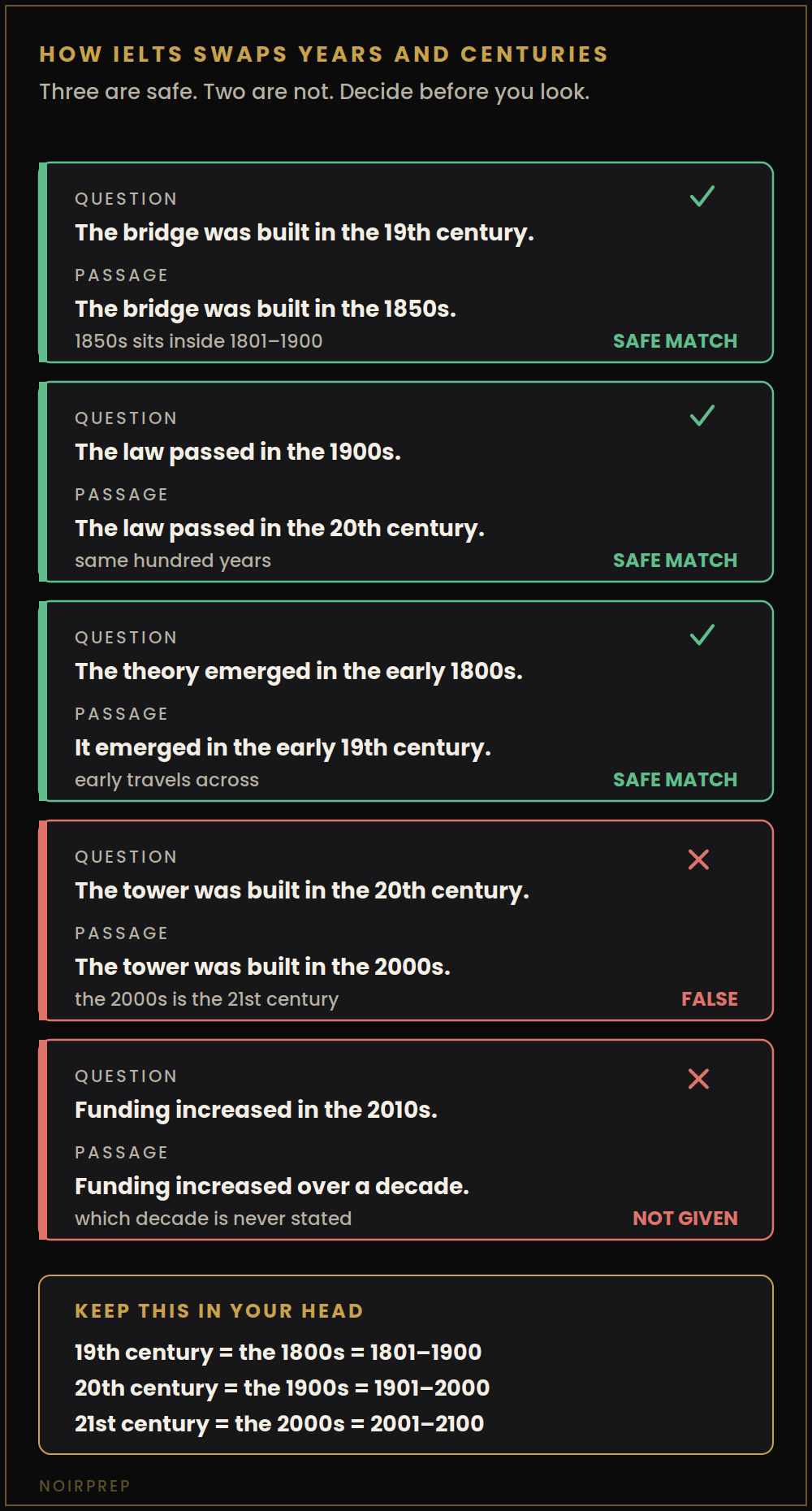
The nineteenth century means the 1800s, which runs from 1801 to 1900. In the same way, the twentieth century means the 1900s, and the twenty-first century means the 2000s.
Read that again if it felt wrong. The numbers do not match, and that is exactly what IELTS uses against you. So a question about the nineteenth century and a passage about the 1800s are talking about the same hundred years.
Early, mid and late cross over safely. The early nineteenth century is simply the early 1800s.
The Two Meanings of a Decade
Here is where the real damage happens.
The 1970s means one named decade: 1970 to 1979. You know exactly which ten years those are.
A decade, on the other hand, means any ten years. It names none of them.
So when your question says funding increased in the 2010s and the passage says funding increased over a decade, you cannot tell which decade. There is not enough information, and the answer is Not Given.
Even so, candidates mark True on this all the time, because both sentences mention ten years and both mention funding.
Vague Time Phrases
Some phrases give you nothing at all, and you need to spot them at once.
Recently. In recent years. Lately. Over the past few years.
None of these names a year. If your question gives one, then the passage has not confirmed it.
Take a question saying online learning grew since 2018, next to a passage saying it grew in recent years. That is Not Given, because recent years might mean since 2015, or it might mean since last spring.
Money: Where Small Words Change Everything
Symbols are safe. Twenty pounds and £20 are the same thing, just as fifty dollars and $50 are.
The danger sits in the words around the figure, and those words fall into two groups.
Not exact: about, approximately, roughly. Exact: exactly, precisely.
Then come the words that set a limit. Under, below and less than mean smaller, while over, above and more than mean bigger. At least sets the lowest point, with no top. At most and up to set the highest point, with no bottom.
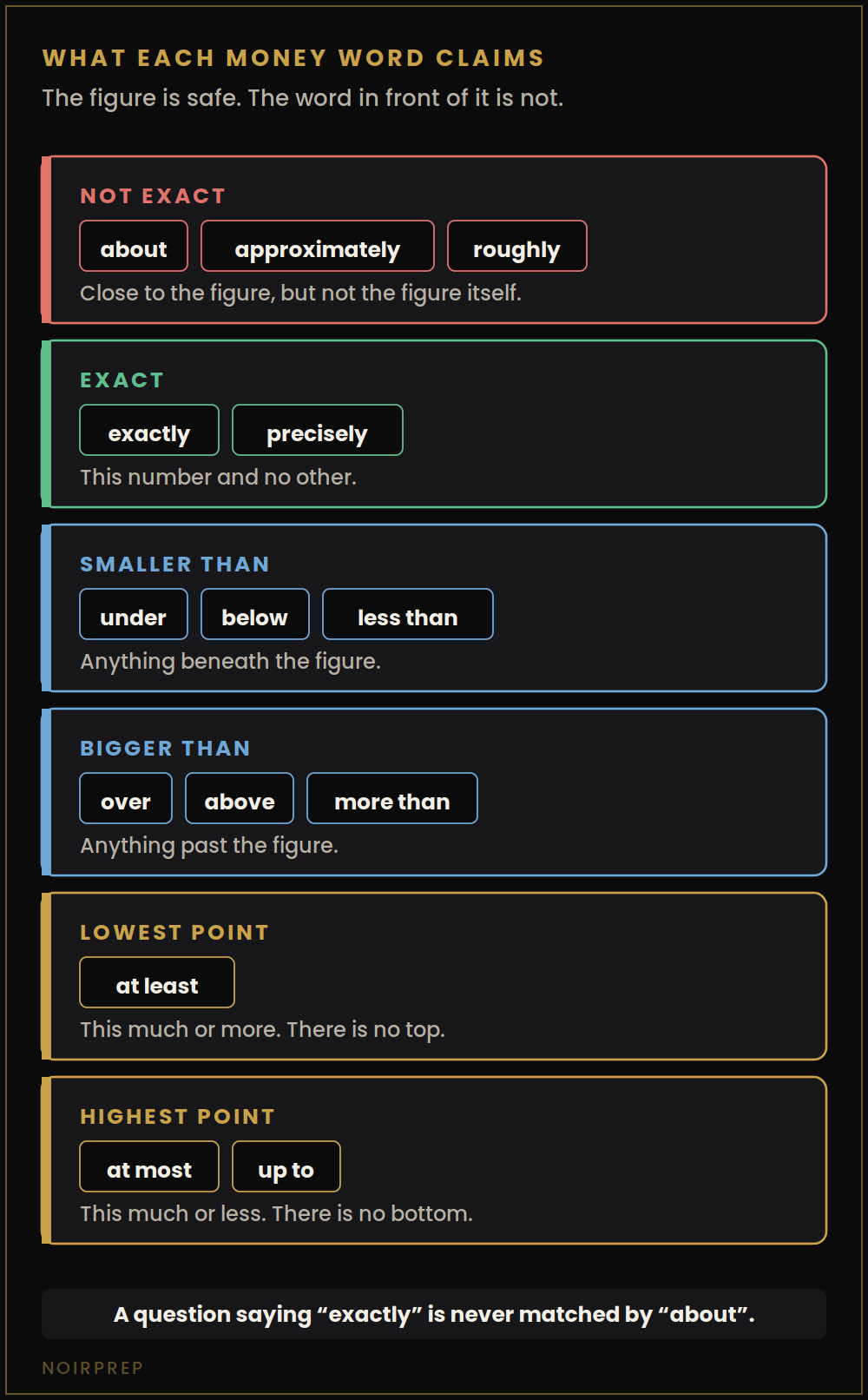
Each of those says something different. So a question that says exactly can never be matched by a passage that says about.
Two Money Traps Worth Learning
First, a deposit is not a total.
If the passage asks for a deposit of fifty pounds, and your question says the total cost is fifty pounds, that is False. A deposit is only part of the payment, so the full price is usually higher.
Second, watch the time unit. Six hundred pounds per year and six hundred pounds per month are very different amounts, yet the two sentences look almost the same on the page. Your eye reads the figure and skips past the unit.
Annual means per year, and monthly means per month. Read the unit before you accept the number.
General Training candidates should also know the informal words used in adverts and conversations: a quid is one pound, a fiver is five, a tenner is ten, and twenty quid is twenty pounds.
Numbers, Percentages and Fractions
This group is kinder, because the swaps are fixed and safe.
Fifty per cent is half, twenty-five per cent is a quarter, and seventy-five per cent is three quarters. Thirty-three per cent is a third, and sixty-seven per cent is two thirds.
The same is true of the “one in” form. Ten per cent is one in ten, twenty per cent is one in five, and twenty-five per cent is one in four.
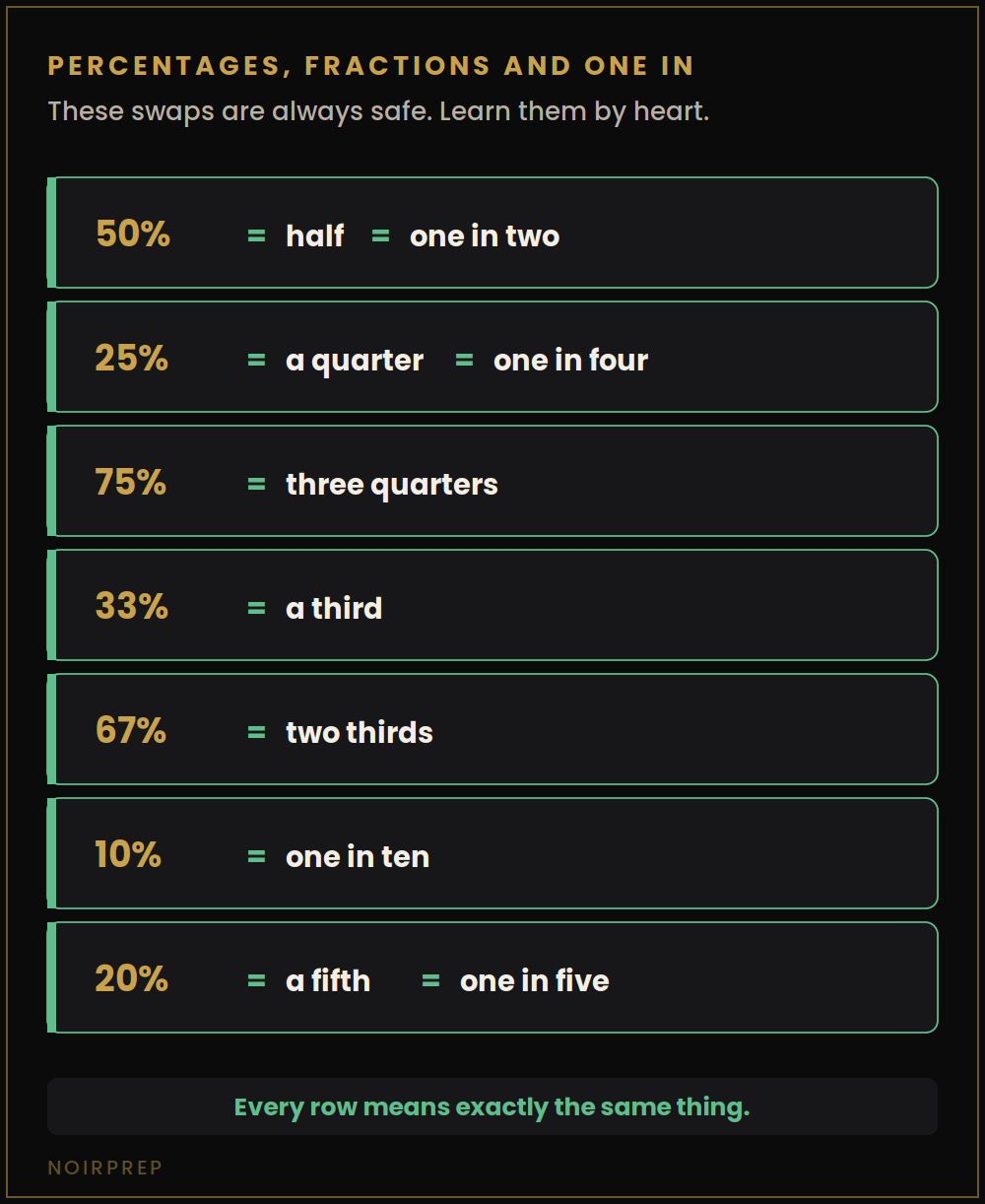
So a question about ten per cent of households and a passage about one in ten households are a safe match, and you can accept it with confidence.
In fact, these are among the few IELTS number traps that help you rather than hurt you, as long as you know the swaps by heart.
Strength: The Word That Changes the Claim
Now for the trap that costs the most marks in True, False, Not Given.
Careful, uncertain words: may, might, could, tends to, generally, suggests, indicates.
Strong, certain words: must, always, never, only, proves, guarantees, shows clearly.
A passage saying a treatment may reduce symptoms has not said that it does. Your question is sure, while the passage only says it is possible. Not Given.
In the same way, a passage saying results suggest a link has not said they prove one. That question claims more than the evidence showed.
Always check the strength before you check anything else. It takes a second, and it decides more answers than vocabulary ever will.
Quantity: Four Words That Control Everything
Some means a part, not all.
Many means a large number, but not always more than half. This is the one candidates get wrong.
Most and the majority both mean more than half, while all means every single one.
Finally, few means almost none, and none means zero.
Now watch the two traps these words create.
A question saying all students preferred online learning, next to a passage saying many students did, is False. The question has claimed too much.
A question saying most participants improved, next to a passage saying many participants improved, is Not Given instead. Many does not prove more than half, and you cannot turn one into the other.
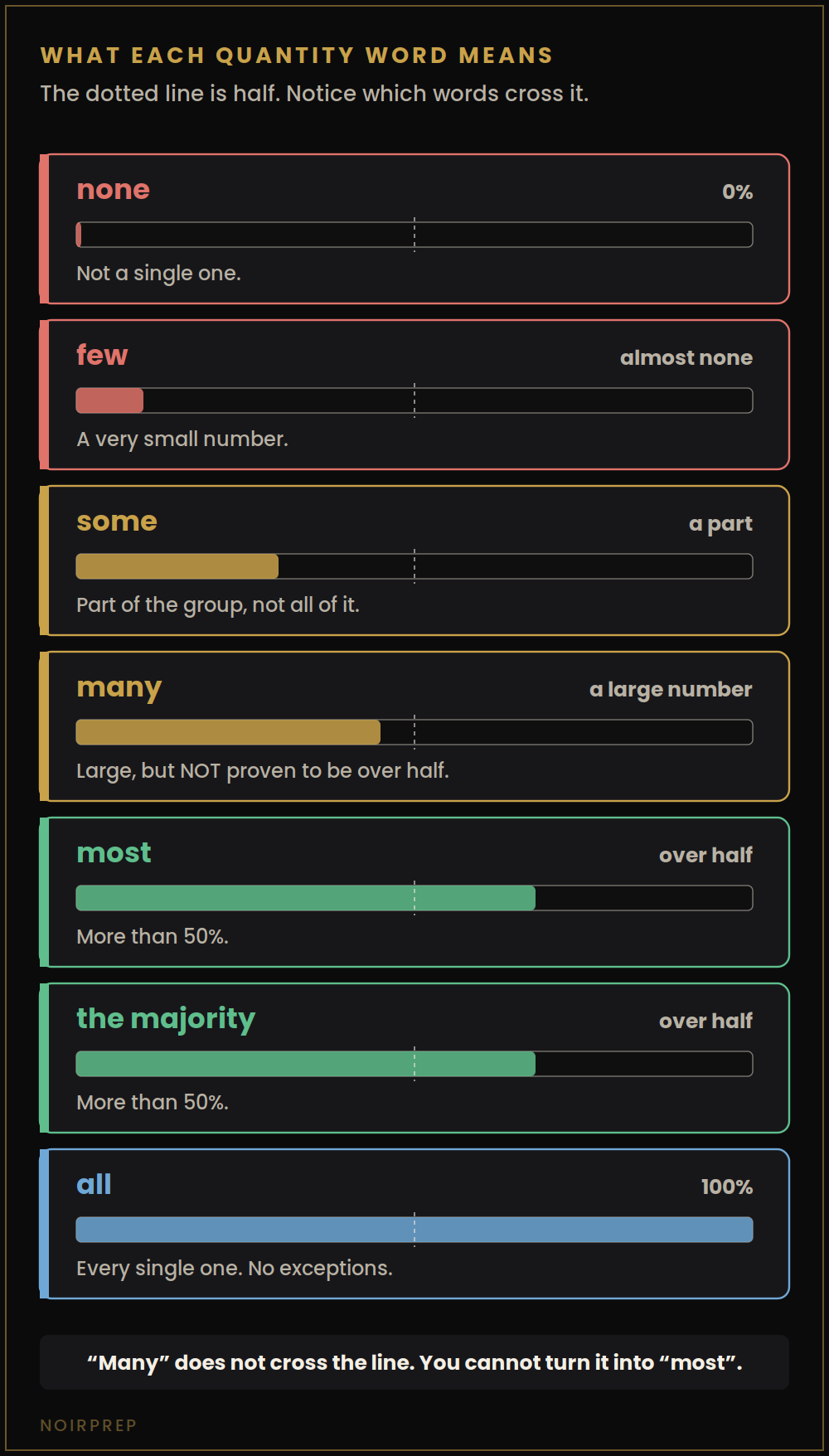
Notice that those two examples give different answers. Claiming all goes against the passage, while turning many into most simply has no proof.
IELTS Number Traps in Listening
Listening is where these traps do the most damage, because you hear the figure once and cannot go back.
Speakers correct themselves all the time, and the correction is the part that counts. The fee is fifty pounds, sorry, forty-five with the discount. A candidate who writes the first number loses the mark. So the rule is simple: never write on the first mention. Wait for the sentence to finish.
Prices are spoken in ways your eye never sees. Fifteen fifty means £15.50. Two thousand and twenty could be a year or an amount, and only the sentence around it tells you which.
Dates work the same way. The nineteenth of March and March the nineteenth are the same, and both may appear in one recording. So do half past two, two thirty and fourteen thirty.
Then comes the trap that catches everyone. A speaker gives a figure, pauses, and adds two more words: it’s about sixty pounds, per person. Those last two words change the whole answer, yet they arrive after your pen has already moved.
Keep listening until the speaker moves on, because the limit almost always comes last.
A Five-Minute Drill
Take any practice passage and ignore the questions completely.
Circle every number, date, price and percentage you can find. Then, next to each one, write the word that limits it: about, over, per year, at least, a deposit of, by 2019.
You will notice something uncomfortable. Almost no figure comes without a word like that attached, and until now you have probably been reading past all of them.
Why These Traps Work
Every trap in this lesson works the same way.
The topic matches. The action matches too. Your eye sees that the sentence is the right one, and your brain celebrates before it reaches the small word at the end.
That small word is never impressive to look at, and it is always the answer. About. May. Many. Per year. A deposit.
So read the sentence twice. That second reading is for the small words only.
The NoirPrep Rule: the number is rarely the trap. The word beside the number is the trap.
Then the Harder Words
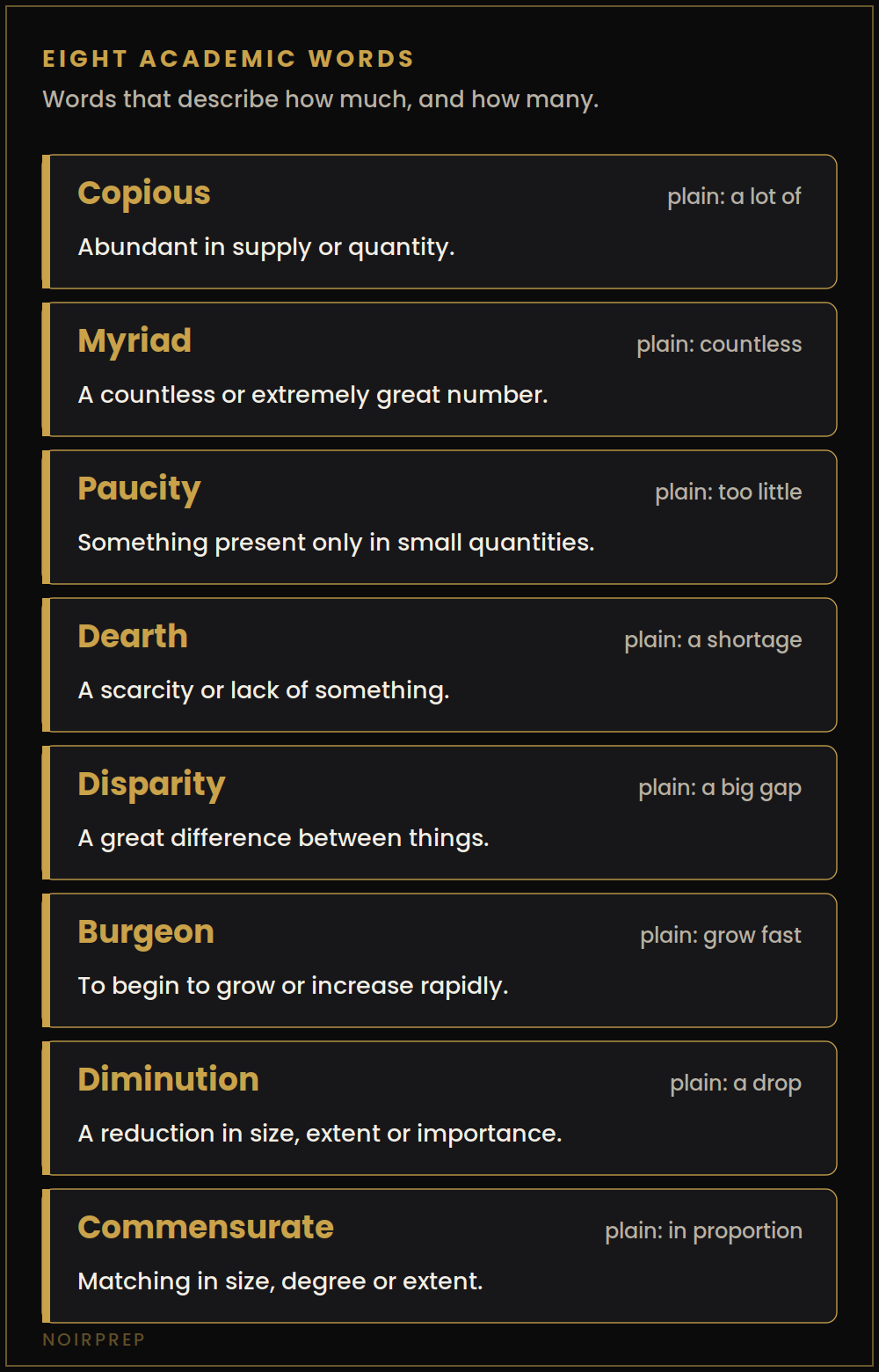
Cover the meanings and try to remember each one from the word alone. Then use each word in a sentence that contains a figure or a date, because that is where you will meet them.
Where to Go Next
Every trap in this lesson checks one thing at a time. The final lesson puts them all into one order: a thirty-second routine to run on every True, False and Not Given decision, followed by a simple chart that tells you which answer to choose.
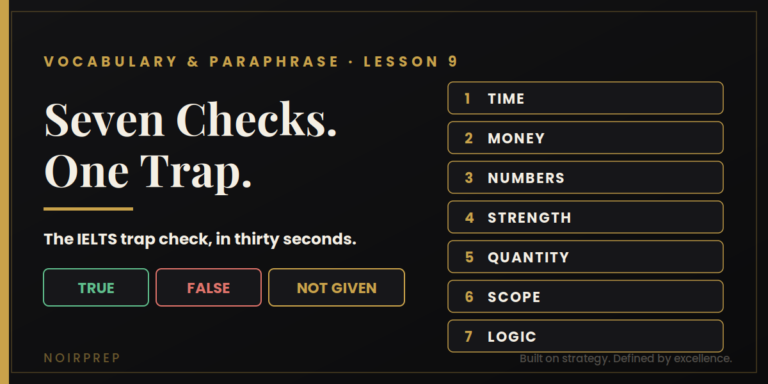
Seven checks, in order, every time. That routine is what turns six separate patterns into one habit you can trust.