IELTS Speaking Part 3: How to Answer Like a Band 8
The examiner takes the cue card back from you, and for a moment it feels as though the difficult part is behind you. Then the questions start again, and they are nothing like the ones you have already answered. Your aunt is no longer the subject. The examiner wants to know whether families support one another as much as they did thirty years ago, and whether you expect that to change.
IELTS speaking part 3 is where good English turns into high band speaking. The questions become more serious, more abstract and considerably harder to predict, which is why so many candidates find that their fluency holds up while their answers quietly fall apart underneath it.
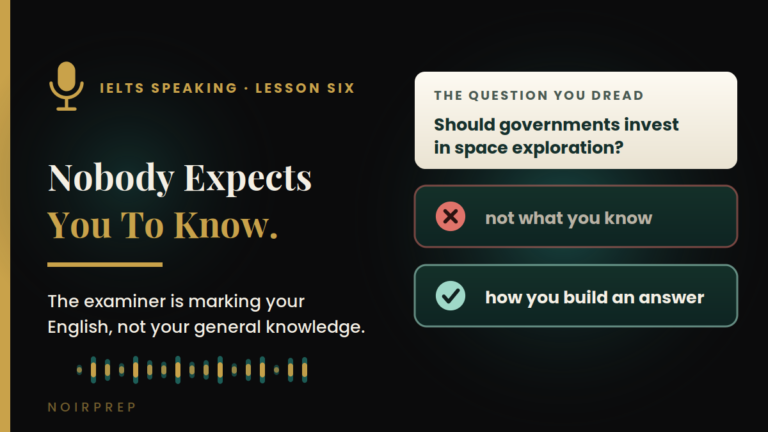
One thing is worth understanding before anything else. The examiner is not waiting for the correct opinion, because no correct opinion exists. What is being assessed is how well you build an idea and support it, and once you have a structure for doing that, Part 3 becomes predictable and manageable.
What Changes in IELTS Speaking Part 3
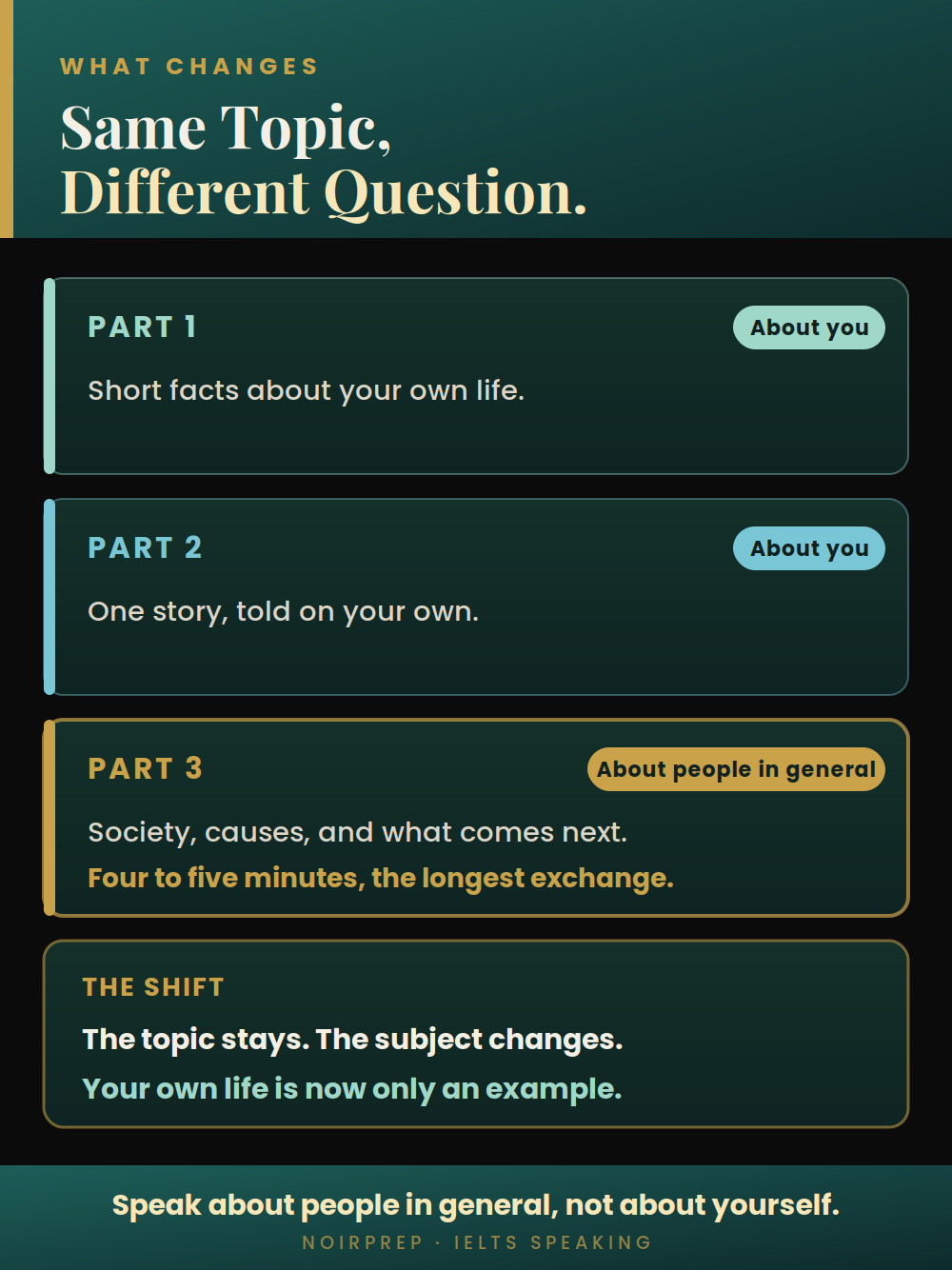
The questions stay connected to the topic of your cue card, but they move away from your own life and out towards people in general.
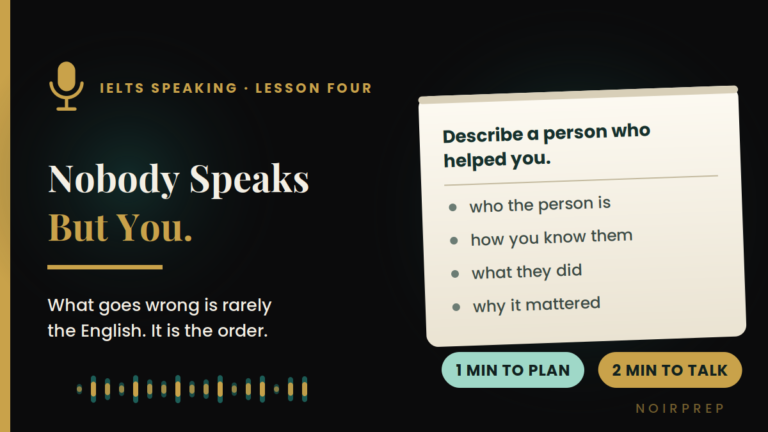
If your card asked about a person who helped you, the examiner might ask why younger people find it harder to ask for help, whether families support each other as much as they once did, or how that support may change over the next twenty years. These are not questions about you, and your personal experience is useful only as an illustration.
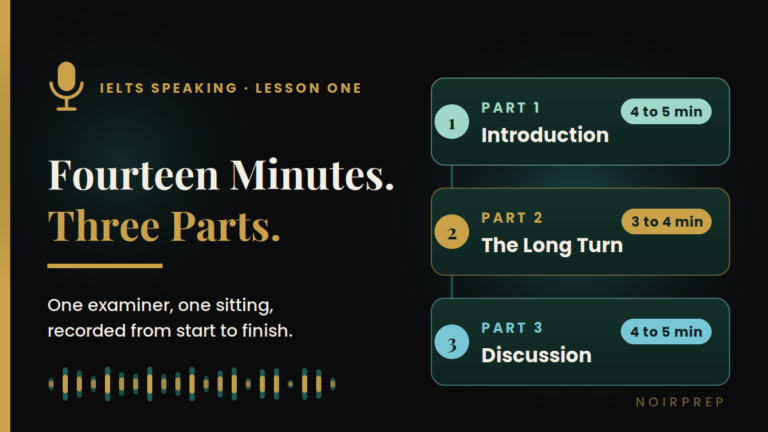
This section runs for four to five minutes, and it is the longest conversation you will have with the examiner.
The Four Steps of an IELTS Speaking Part 3 Answer

A good answer here is carried by four steps, and each one does a job the others cannot.
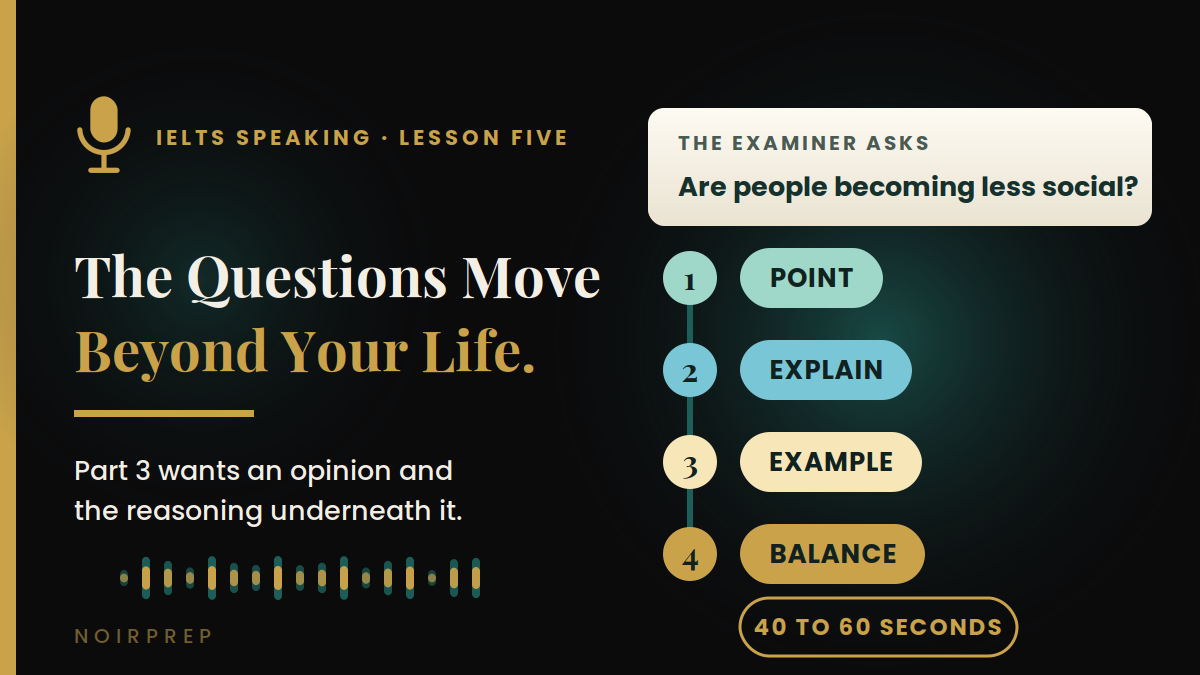
Your point comes first, which means stating your opinion or your direct answer immediately rather than working your way towards it. Then you explain, giving one strong and specific reason for the position you have just taken. The example follows, and it should be a realistic situation rather than a number you have invented on the spot. Balance closes the answer, where you acknowledge the other side, name an exception, or attach a condition to what you have said.
Here is the whole thing working on a real question.
Question: Do you think people are becoming less social nowadays?
Point: “Yes, I think many people are becoming less social in real life.”
Explain: “Social media has replaced a lot of face-to-face interaction, so people can feel connected without ever actually meeting.”
Example: “Friends might chat online every day and still not see each other for months, even when they live in the same city.”
Balance: “That said, it does depend on personality. Some people still enjoy meeting in person, and in certain cultures community events remain very strong.”
Spoken aloud that takes about fifty seconds, which is where you want to be. Aim for forty to sixty seconds on every answer in this section. The target is a complete answer rather than a long one.
How to Give an Opinion Without Sounding Extreme

A balanced answer sounds more intelligent and more controlled than a confident but extreme one, and that is true every single time.
Candidates frequently assume the opposite. They believe a firm opinion sounds strong, so they say “I think technology is good” and leave it there, or they take a position so one-sided that the answer has nowhere left to travel.
Compare that with the same opinion properly built out.
Weak: “I think technology is good.”
Strong: “I think technology is mostly positive. One reason is that it saves an enormous amount of time, since tasks that used to take hours can now take minutes. That said, it can become a distraction if it is not managed carefully.”
Nothing difficult has been added there. One reason and one qualification turned four words into something the examiner can actually assess.
Three kinds of opener will carry you through almost any question in IELTS speaking part 3. When your view is firm, begin with “yes, I definitely think so because” or “no, mainly because”. When you can see both sides, use “to some extent, yes, but it depends on” or “in some cases, although there are exceptions”. When the honest answer varies, reach for “it depends on the situation, but generally” or “if we are talking about young people, but for older people”.
Four Ways to Compare, and One Way to Predict
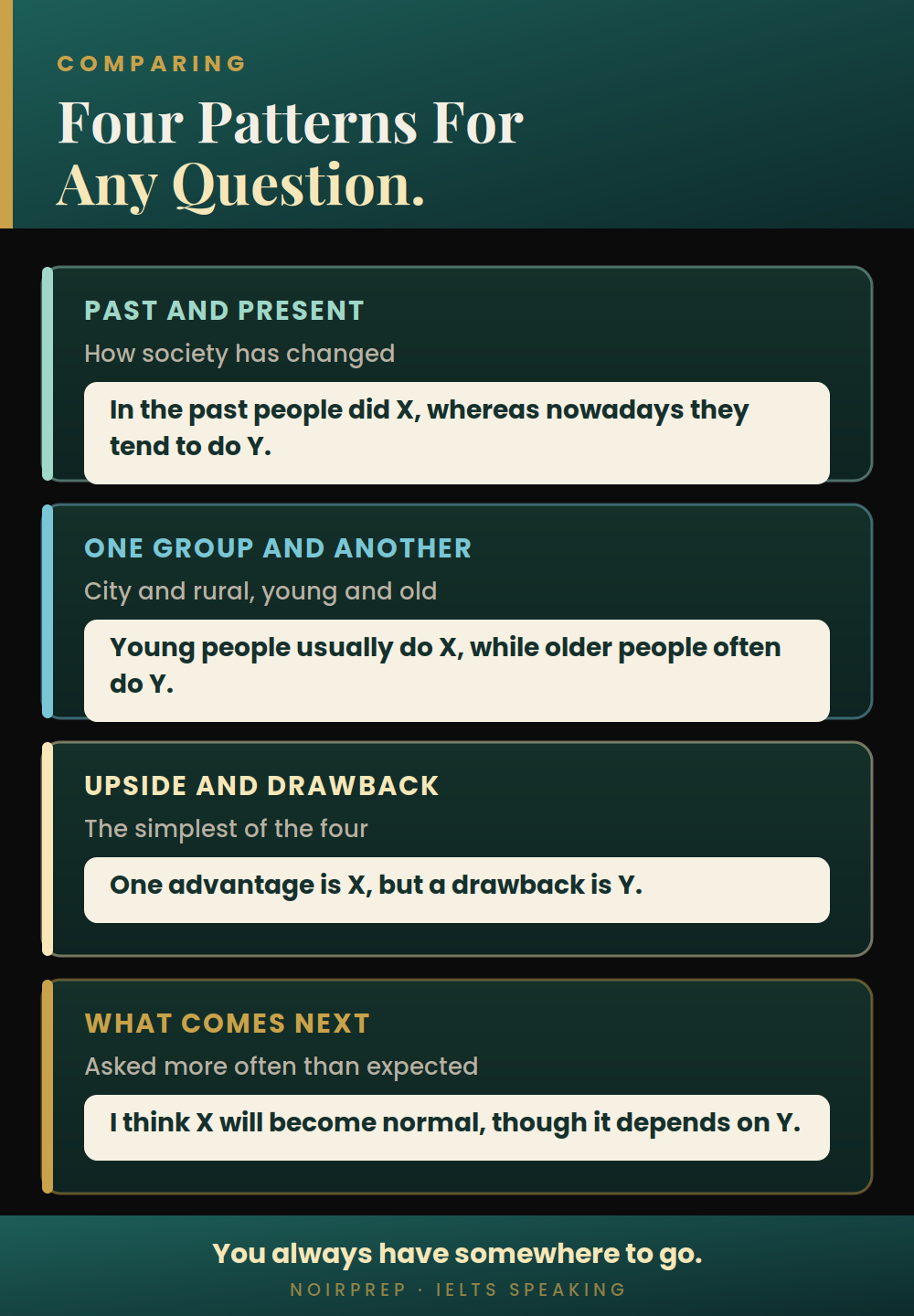
A large share of Part 3 questions ask you to compare something with something else, and four patterns cover nearly all of them.
The first sets the past against the present and suits any question about how society has changed. In the past people did one thing, whereas nowadays they tend to do another. You can also say that compared to before, people today are more likely to behave in a particular way.
The second compares one group with another. In cities people behave one way, but in rural areas they behave differently. Young people usually do this, while older people often do that.
The third weighs advantages against drawbacks, and it is the simplest of the four. One advantage is this, but a drawback is that.
The fourth deals with the future, which examiners ask about more often than candidates expect. Say what you think will happen, then attach the condition it depends upon. In the future I think this will become normal, though it depends on government policy and public demand.
Learning those four patterns means you always have somewhere to go, even when a question arrives on a subject you have never thought about.
Four IELTS Speaking Part 3 Mistakes to Stop Making

Giving an opinion with nothing behind it is the first and by far the most common. “I think social media is bad” tells the examiner what you believe and nothing whatever about how you think. Follow every opinion with your reason, your example and your balance.
Answering only from your own life is the second. These questions ask about people in general, so “in my life I always” is the wrong register for them. Speak about most people, many societies, or young people as a group, and keep yourself as an example rather than the subject.
Taking an extreme and one-sided position is the third, and it leaves you stranded with nowhere to go. Soften it with “however”, “to some extent” or “it depends on”, and the same answer immediately sounds more considered.
Rambling is the fourth, and it catches candidates who are otherwise performing well. A long answer that loses its structure scores below a shorter one that keeps it. Forty to sixty seconds remains the range that works.
What to Practise Before Your Test
These five questions all come from one cue card topic, which is a person who helped you, so they behave exactly as a real Part 3 would.
- Why do some people find it difficult to ask for help?
- Do families support each other as much as they did in the past?
- Is it better to receive help from family or from friends?
- How might the way people support one another change in the future?
- Should governments do more to help people who are struggling?
Answer each one aloud using the four steps and record yourself doing it, keeping every answer between forty and sixty seconds.
When you listen back, check the balance first, because that is the step candidates drop most often. Then listen to your openings, and if more than two answers began with “I think”, go back and vary them using the three kinds above.
Finally, count how often you said “I” or “my life” in each answer. More than once or twice means you were speaking personally about a question that asked you to speak generally, and that single habit is enough on its own to hold a candidate at band 6 for the whole section. The next lesson focuses on how to answer any speaking questions even when you know nothing.